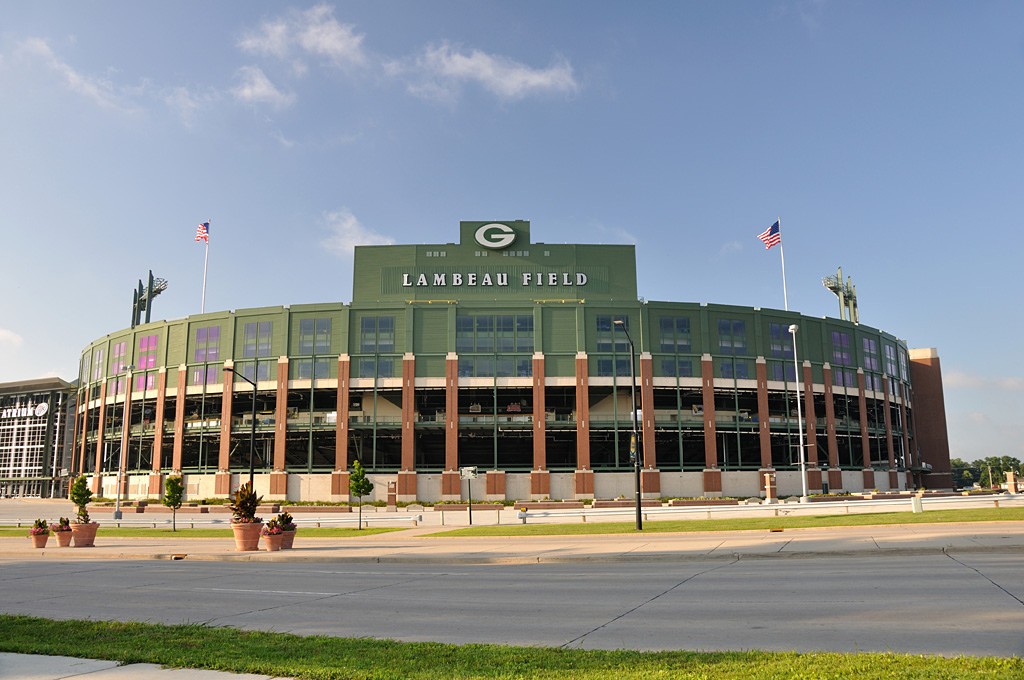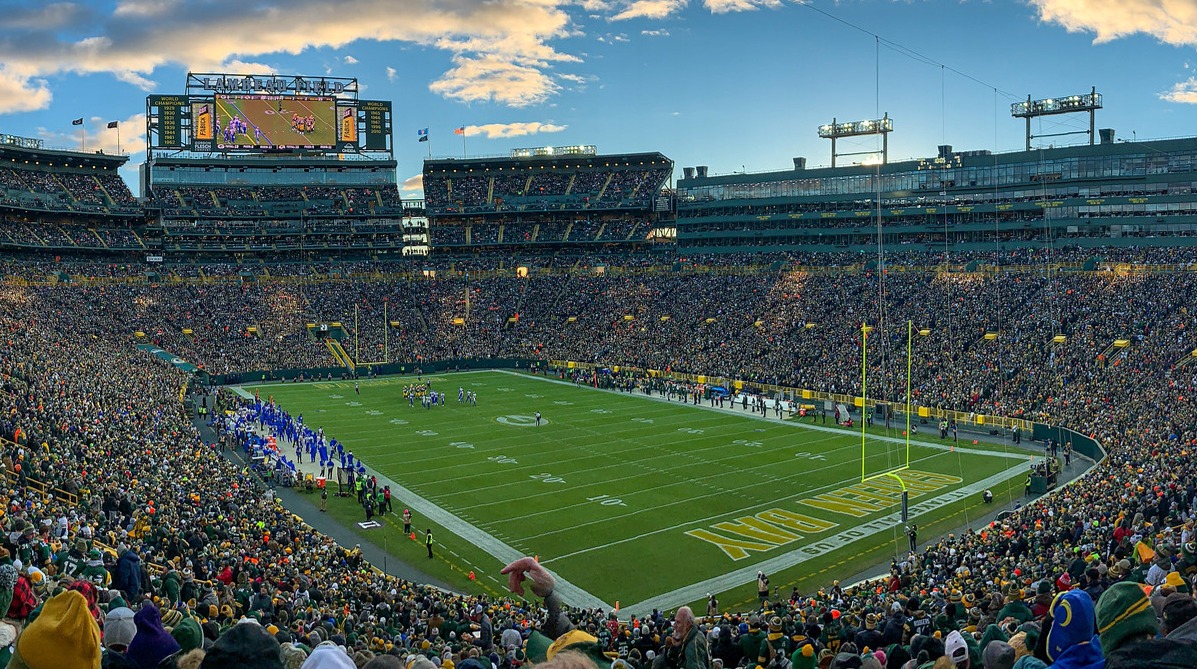
Often described as the NFL’s most historic venue—the league’s equivalent of Yankee Stadium—Lambeau Field stands as the enduring home of one of professional sports’ most storied franchises, the Green Bay Packers. For more than six decades, Lambeau Field has hosted Packers football and served as the backdrop for multiple championship eras, including four Super Bowl winning teams.
From their founding in the 1920s through 1956, the Packers played at City Stadium. Beginning in 1952, the team also scheduled select games at County Stadium in Milwaukee, which later became home to the Milwaukee Braves and, subsequently, the Milwaukee Brewers. By the mid-1950s, concerns over City Stadium’s limited 25,000-seat capacity prompted the NFL to pressure the franchise to secure a larger, modern facility or risk a permanent relocation to Milwaukee. In 1956, Green Bay voters approved a bond measure to fund construction of a new stadium. Completed in just one year, the new City Stadium, built for professional football only opened on September 29, 1957, when the Packers faced the Chicago Bears. With an initial capacity of 32,000, it was the first stadium constructed specifically for an NFL franchise. Despite the new facility, the Packers continued to split home games between Green Bay and Milwaukee until 1994.
The stadium evolved steadily in the decades that followed. Capacity expansions in the early 1960s increased seating to more than 42,000. In 1965, the venue was renamed Lambeau Field in honor of team founder Earl “Curly” Lambeau, and seating grew to over 50,000—establishing the fully enclosed bowl configuration that defines the stadium today. Additional enhancements included luxury suites in 1985, further premium seating and suites in 1990, the installation of the first video scoreboard in 1993, and continued suite expansion in 1995.
| MEMORABLE MOMENTS IN PACKERS HISTORY |
|
Rather than pursue a new stadium, the Packers committed to a comprehensive renovation in 2000. Completed between 2001 and the 2003 seasons, the transformation modernized the venue while preserving its historic character. Improvements included expanded concourses, new upper-level access via ramps and elevators, increased restroom capacity, and the addition of nearly 12,000 seats, including club and premium seating. The project also introduced the Lambeau Field Atrium, often referred to as “Titletown,” featuring the Green Bay Packers Hall of Fame, retail space, and enhanced team facilities, including locker rooms and football operations offices.
The most recent major expansion, completed in 2013, increased capacity to over 80,000. The project added approximately 7,000 seats in the south end zone, introduced a rooftop viewing platform in the north end zone, and included two high-definition video boards. The $130 million investment was fully funded by the organization.
Throughout its history, Lambeau Field has been the setting for some of the NFL’s most iconic moments, including the 1961 NFL Championship Game and the legendary Ice Bowl, played in brutally cold conditions. It is also closely associated with Hall of Fame coach Vince Lombardi, who led the Packers’ dominant teams of the 1960s.
Today, Lambeau Field remains one of the most recognizable and revered venues in professional sports, a living symbol of the Packers’ legacy, which includes their most recent championship victory in Super Bowl XLV on February 6, 2011.