
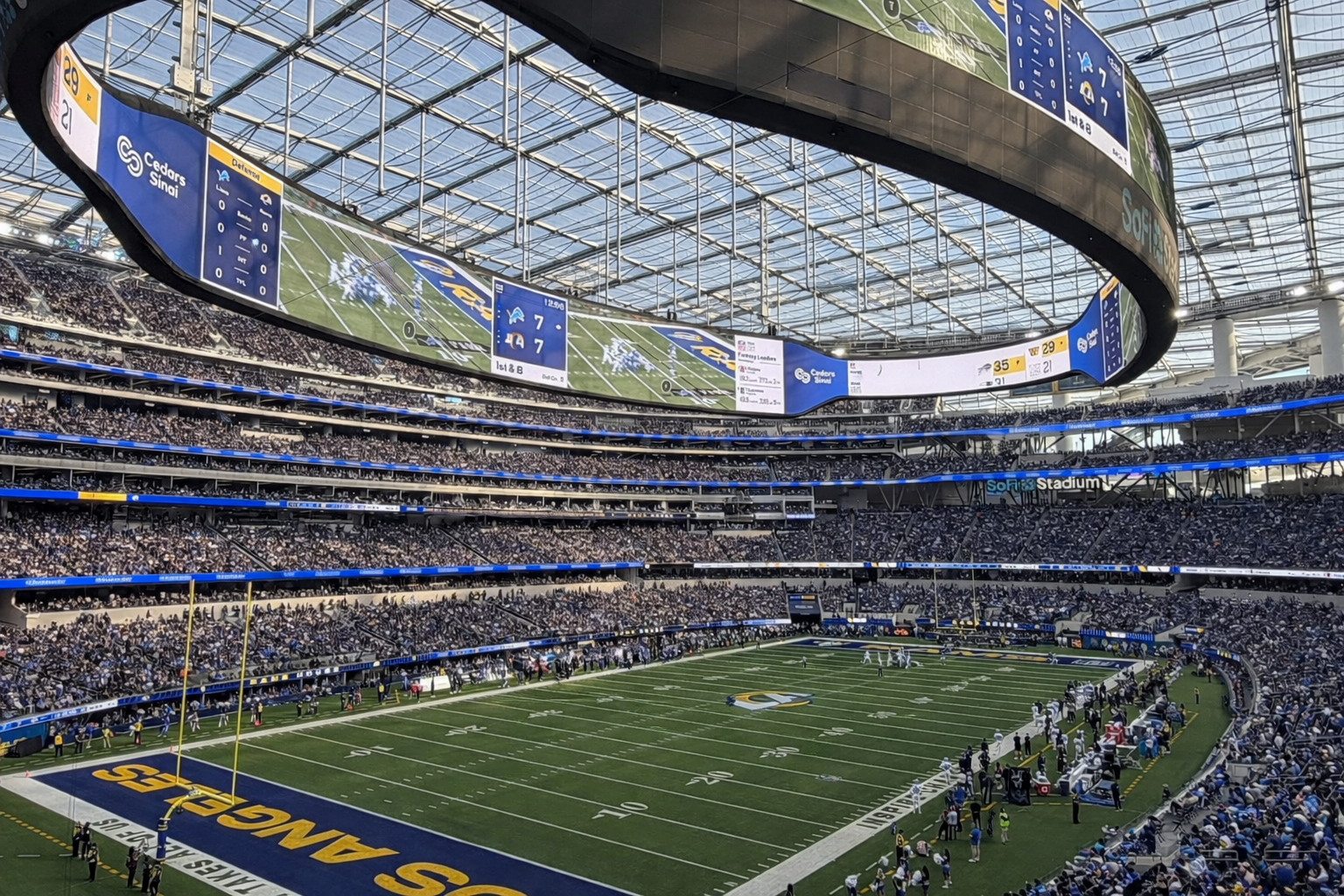
A new chapter in the history of professional football in Los Angeles begins in 2020 as the Los Angeles Chargers and Rams move into SoFi Stadium. For more than two decades the second largest city in the United States, Los Angeles, was without a professional football team. That changed in 2016 as the Rams moved back to the city from St. Louis. The Rams move to Los Angeles was a homecoming as they played here from 1946 until 1994. They moved to St. Louis at the beginning of the 1995 season after failing to have a new stadium built to replace Anaheim Stadium.
Following the Rams’ departure in 1994, multiple efforts were made to bring the NFL back to the Los Angeles area through new stadium proposals. In January 2015, Rams owner Stan Kroenke unveiled plans for a privately funded stadium in Inglewood, citing dissatisfaction with the Edward Jones Dome. Around the same time, the San Diego Chargers and Oakland Raiders explored a joint stadium project in Carson, CA. On January 12, 2016, NFL owners approved the Rams’ relocation to Los Angeles and authorized construction of the Inglewood stadium, while granting the Chargers a one-year option to join them.
In January 2017, the Chargers exercised that option, relocating from San Diego after failing to secure a new stadium to replace Qualcomm Stadium. Construction of SoFi Stadium began in late 2016, though unusually heavy rainfall in 2017 delayed completion beyond its original 2019 target. During construction, the Rams played at Los Angeles Memorial Coliseum, while the Chargers temporarily played at StubHub Center.
In 2019, SoFi secured naming rights in a deal valued at $30 million annually. The Rams hosted the first NFL game at the stadium on September 13, 2020, against the Dallas Cowboys, followed by the Chargers’ home debut the next week against the Kansas City Chiefs.
SoFi Stadium stands apart from any other NFL venue. Its expansive 2.5-acre outdoor plaza connects the stadium to a 6,000-seat performance venue, landscaped park space, and a man-made lake with waterfalls, elements designed to reflect Southern California’s natural environment. The stadium itself features a low-profile design, with the playing field set approximately 100 feet below street level, while the sweeping canopy roof rises 275 feet above the field. Constructed from translucent materials, the canopy allows natural light to enter while providing shade and protection. Open-air sides further enhance airflow throughout the venue.
Inside, the stadium accommodates 70,000 fans, with the ability to expand beyond 100,000 for major events. Multiple seating tiers surround the field, including approximately 260 luxury suites. Unique seating options include field-level cabanas, offering a premium, beach club-style experience. Suspended from the roof is one of the most distinctive features in sports, a massive, double-sided oval video board stretching 120 yards in length and standing 40 feet tall, ensuring visibility from every seat.
Beyond serving as home to the Rams and Chargers, SoFi Stadium is a premier global events venue. It hosted Super Bowl LVI and the College Football Playoff National Championship in 2023. Looking ahead, it is scheduled to host matches during the 2026 FIFA World Cup, Super Bowl LXI in 2027 and will play a central role in the 2028 Summer Olympics, including the opening and closing ceremonies.

