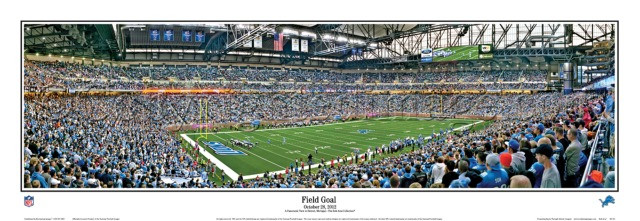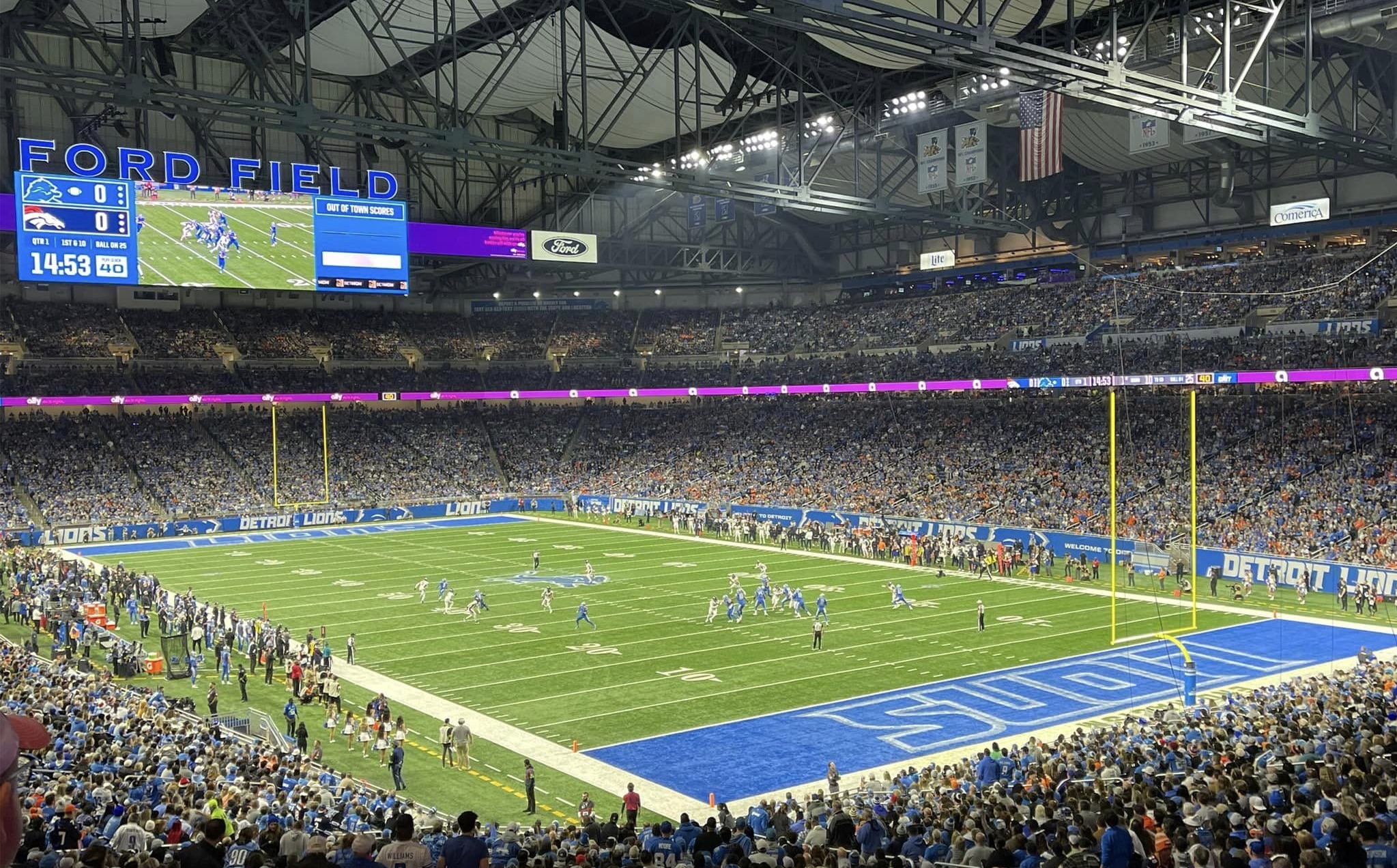
The year 2002 marked the opening of three new stadiums in the NFL, including Ford Field, the home of the Detroit Lions. In 1975, the Lions left Detroit and moved to Pontiac Silverdome in Pontiac, Michigan, an 80,000-seat stadium where the team played for more than two decades. By the mid-1990s, however, the franchise began pursuing a new stadium as the Silverdome had become economically obsolete.
In 1995, the Lions began exploring the possibility of returning to downtown Detroit. On August 20, 1996, the team—owned by William Clay Ford Sr.—announced plans to build a new domed stadium in the city. In November 1996, voters approved a referendum that funded 51 percent of the project, with the Lions covering the remaining 49 percent of the $500 million cost. The new stadium was planned as part of a larger sports and entertainment district that also included Comerica Park, home of the Detroit Tigers of Major League Baseball. Ford Motor Company purchased the stadium’s naming rights for $40 million over 20 years, leading to the name Ford Field. Construction began on November 16, 1999, and the stadium was completed in 2002.
| MEMORABLE MOMENTS IN LIONS HISTORY |
|
On September 22, 2002, the Lions played their first game at Ford Field against the Green Bay Packers. Ford Field quickly became known as one of the NFL’s most distinctive stadiums. The facility seats approximately 65,000 fans and features a fixed roof supported by two 18-foot-wide concrete columns. A permanent dome supported by structural steel was selected in part because of Detroit’s cold and harsh winter climate.
One of the stadium’s most unique design features is the incorporation of the historic Hudson’s Warehouse, whose 1920s facade forms the entire south wall of the stadium. The building was renovated to include 132 luxury suites across three levels overlooking the playing field, along with retail shops and restaurants. Unlike many domed stadiums, Ford Field was designed to maximize natural light. The stadium features extensive glass elements, including a six-story glass atrium at the south entrance that provides impressive views of the downtown Detroit skyline. The FieldTurf playing surface sits 45 feet below street level, allowing fans easier access to their seats.
Ford Field has many amenities, including 8,600 club seats, 140 luxury suites, club lounges, banquet facilities, conference and convention spaces, and a Lions team store. In addition to serving as the home of the Lions, the stadium has hosted many major events. These include Super Bowl XL in 2006, the NCAA Men’s Basketball Tournament in 2008 and 2009, and the NCAA Frozen Four in 2010. On December 13, 2010, Ford Field also hosted an NFL game between the Minnesota Vikings and the New York Giants after the roof of the Hubert H. Humphrey Metrodome collapsed.
Prior to the 2017 season, the Lions completed a $100 million renovation of Ford Field. The most visible upgrades were new HD videoboards in both end zones measuring 39.5 feet high by 152.5 feet wide. The stadium’s concourses were also redesigned with a more football-focused theme. A new 90-foot-long bar, known as the “Corner Bar,” was added, inspired by the bars surrounding the Lions’ former home, Tiger Stadium. Additional terrace clubs and suites were also introduced throughout the stadium.
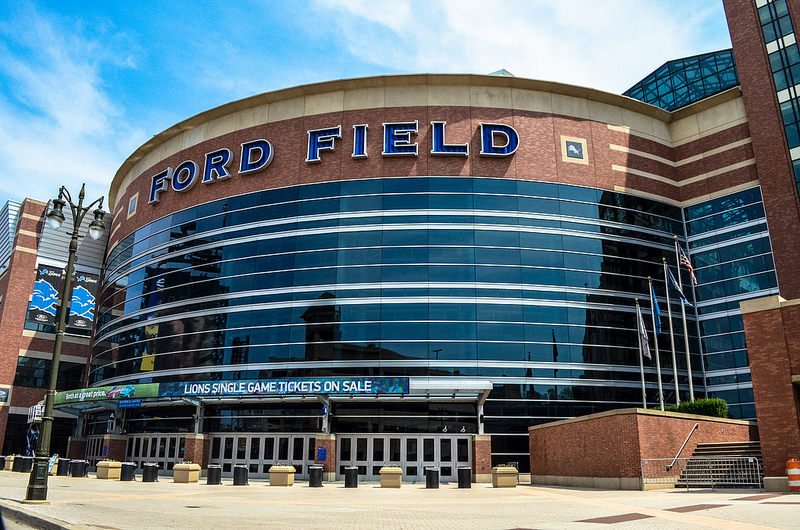
Outside Ford Field, home of the Detroit Lions