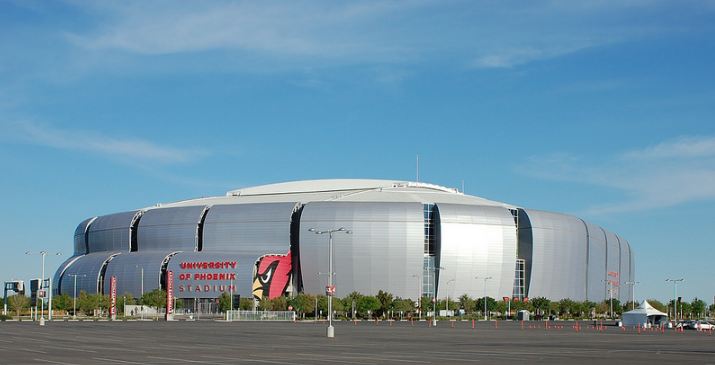
Where can you find one of the sleekest and most futuristic stadiums in the NFL? Not in New York or Chicago, but in the desert of Glendale, AZ. State Farm Stadium is home to the Arizona Cardinals, and it marks the first time in franchise history that the team has had a stadium entirely to itself.
The Cardinals’ roots stretch back to 1898, when the team was founded in Chicago. They originally played at Comiskey Park, home of the Chicago White Sox (MLB). In 1960, the franchise relocated to St. Louis, sharing Busch Stadium with the St. Louis Cardinals. After the 1987 season, the team moved to Arizona, playing at Sun Devil Stadium, home of the Arizona State Sun Devils.
By the late 1990s, the Cardinals began pursuing a new, permanent home. After years of discussion, the Arizona State Tourism and Sports Authority approved plans in August 2002 to construct a state-of-the-art, retractable-roof stadium in Glendale. Built at a cost of $455 million, the facility introduced groundbreaking features, including both a retractable roof and a movable playing field. The stadium sits on 28 acres owned by the sports authority. The Cardinals contributed $109 million, about 25% of the total cost, including overruns, while the authority funded the remaining 75%. Additionally, the team purchased the land for $18.5 million.
| MEMORABLE MOMENTS IN CARDINALS HISTORY |
|
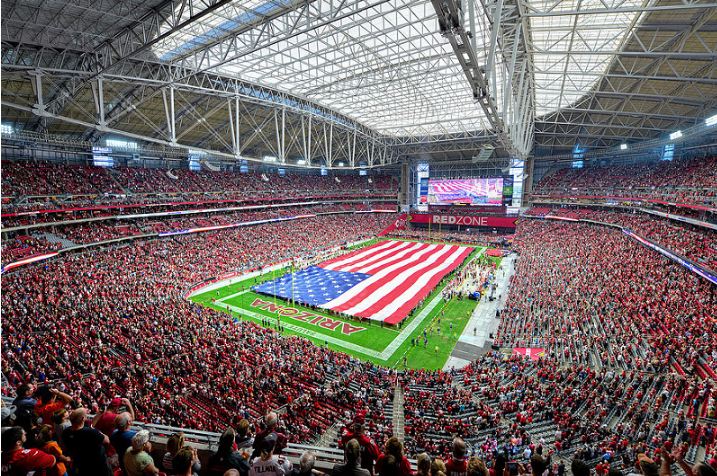
The stadium’s retractable roof consists of two massive panels, each measuring 180 feet by 240 feet. These panels can close to allow for air conditioning during Arizona’s intense summer heat or open during cooler months to take advantage of the region’s abundant sunshine. The translucent fabric roof allows natural light to filter in, maintaining an open, airy atmosphere even when closed. The system can fully open or close in about 12 minutes.
Perhaps the most innovative feature is the fully retractable natural-grass field, the first of its kind in North America. The field sits in a single tray measuring 234 feet wide by 403 feet long and weighing approximately 18.9 million pounds. On game days, it is positioned inside the stadium to provide a natural playing surface. For more than 350 days each year, it rests outside, receiving sunlight and water to maintain optimal growing conditions. The tray moves along 13 parallel steel rails, supported by 462 steel wheels.
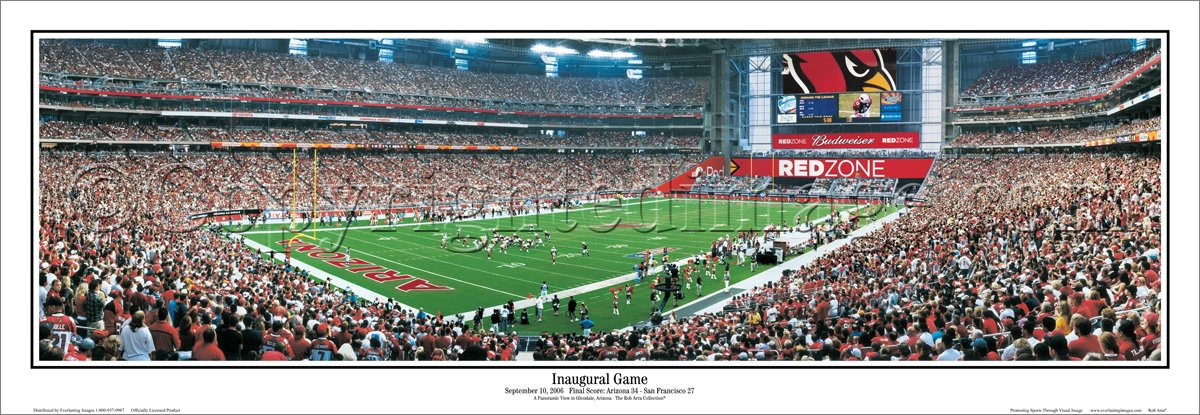
Construction began in July 2003. Although initially slated for completion in time for the 2005 NFL season, the stadium officially opened on August 12, 2006, when the Cardinals hosted the Pittsburgh Steelers in a preseason game. The team’s first regular-season game there took place on September 10, 2006, against the San Francisco 49ers.
With its bold, modern design, the stadium seats 63,400 fans for football and can expand to 72,800 for major events. Originally named University of Phoenix Stadium, it carried that name through the 2017 season before being renamed State Farm Stadium ahead of the 2018 season following an 18-year naming rights agreement with State Farm Insurance.
Beyond serving as the Cardinals’ home, the venue has hosted some of the biggest events in sports, including Super Bowl XLII, Super Bowl XLIX, Super Bowl LVII, multiple NCAA Final Four championships, and the annual college football Fiesta Bowl.