Known as “The Eighth Wonder of the World,” the Astrodome served as a landmark venue for more than four decades, hosting a wide range of sporting and entertainment events. Its origins trace back to the mid-1950s, when Roy Hofheinz envisioned a revolutionary domed stadium. In an effort to attract a Major League Baseball franchise to Houston, Hofheinz even constructed a scale model of the proposed facility. That vision soon became reality: in October 1960, Houston was awarded an MLB franchise, and voters approved an $18 million bond to fund construction. Work on the stadium began on January 3, 1962, with the goal of creating a multi-purpose venue capable of hosting baseball, football, boxing, and other events.
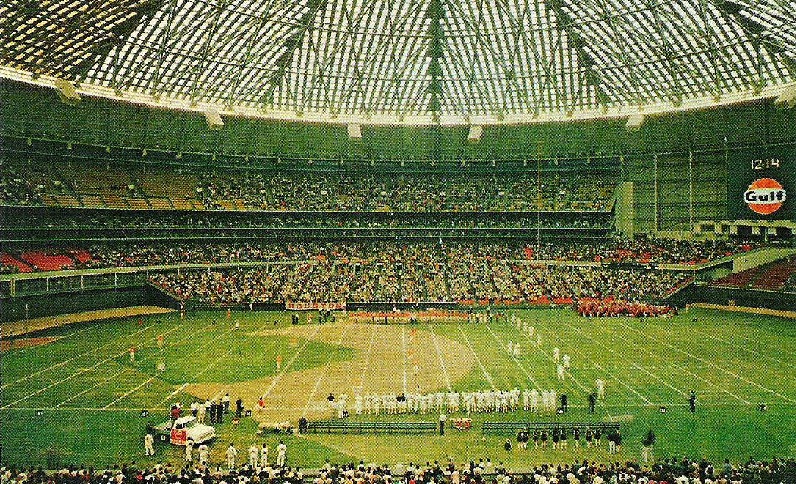
Before the dome was completed, the Houston Oilers played at Jeppesen Stadium for five seasons, followed by three seasons at Rice Stadium. Originally known as the Harris County Domed Stadium, the Astrodome officially opened in 1965. The Houston Astros played the first-ever game there on April 12, 1965. The stadium featured six levels of multicolored seating wrapping around two-thirds of the interior bowl, with a total capacity of 42,217 cushioned seats. It also included 53 luxury suites, an early innovation in professional sports venues. Behind one end zone stood a massive 474-foot scoreboard and display system, reportedly costing $2 million.
The dome itself rose 18 stories above the field and incorporated translucent “Lucite” skylights designed to allow sunlight to reach the natural grass playing surface. However, the design quickly created unexpected issues: sunlight glare blinded outfielders during daytime games, forcing roughly 30 percent of the panels to be painted over. This reduction in sunlight ultimately prevented the grass from surviving, leading to the development of a synthetic alternative. After the 1965 season, the stadium debuted a new surface, AstroTurf, named after the team.
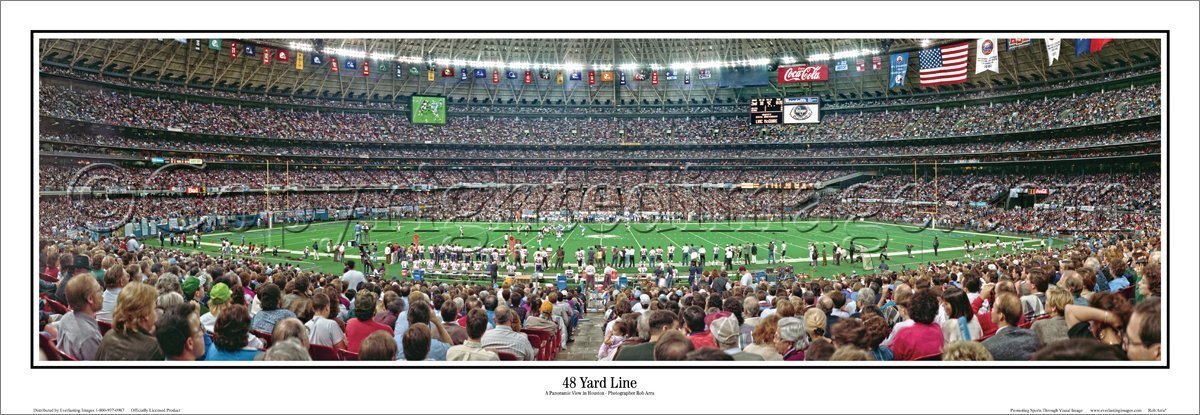
The Houston Oilers made their Astrodome debut on September 9, 1968. To accommodate football, sections of the lower deck seating could be repositioned to create a the gridiron field. The stadium remained largely unchanged until 1989, when major renovations were undertaken after Oilers owner Bud Adams threatened relocation. The upgrades added approximately 10,000 seats and additional luxury suites, increasing football capacity to over 60,000. Five tiers of seating now enclosed the field, and the original scoreboard was replaced with modern video boards installed in the upper deck.
By the mid-1990s, both the Oilers and the Astros were seeking new, separate stadiums. Bud Adams continued to push for a new domed facility in downtown Houston and even offered $85 million toward construction in 1993, but public support never materialized. As a result, the Oilers relocated to Nashville after the 1996 season. Their final game at the Astrodome came on December 21, 1996. The Astros remained for two more seasons before moving to Daikin Field.
In 2000, Houston was awarded an expansion NFL franchise, the Houston Texans, who began play at NRG Stadium in 2002. Today, the Astrodome still stands adjacent to NRG Stadium, no longer in active use, with its future remaining uncertain despite its iconic place in sports history.