Although often remembered for hosting some of the San Diego Chargers’ early successful teams, Balboa Stadium predates the team’s arrival and was originally used for a wide range of local sporting events. Before settling in San Diego, the franchise, then based in Los Angeles, played its inaugural season in 1960 at the Los Angeles Memorial Coliseum. After just one year, owner Barron Hilton relocated the team to San Diego, where Balboa Stadium became their new home.
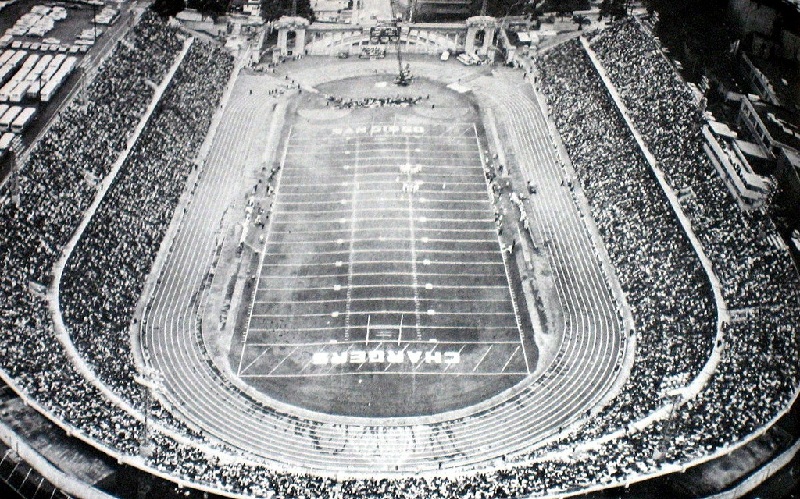
Built in 1914 near the campus of San Diego High School, Balboa Stadium originally featured a straightforward design with concrete seating on both sides of the field. When the Chargers arrived, the venue was expanded to better accommodate professional football. In May 1961, an upper deck was added, boosting capacity from 23,000 to 34,000 and giving the stadium its distinctive horseshoe shape.
The Chargers played their first game at Balboa Stadium on August 6, 1961, defeating the Houston Oilers. Over the next six seasons, the team called the stadium home, highlighted by an AFL Championship victory in 1961. The venue became an important early chapter in the Chargers’ history, hosting the team during its formative years in San Diego.
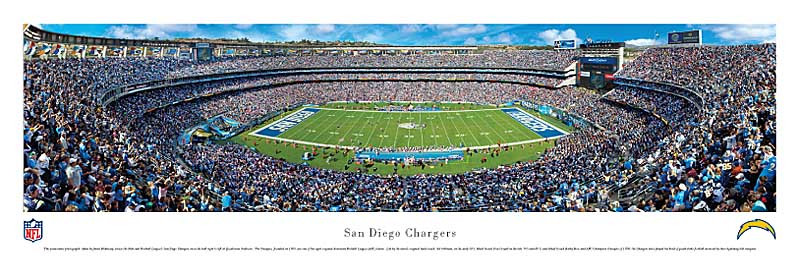
By the mid-1960s, growing demand for a modern facility led local sportswriter Jack Murphy to champion the idea of a new stadium in Mission Valley. His advocacy helped secure support for what would become a 50,000-seat venue later known as Qualcomm Stadium.
The Chargers played their final game at Balboa Stadium in December 1966 before moving into the new stadium in 1967. Today, Balboa Stadium continues to serve the community primarily as a venue for high school athletics and local sporting events, preserving a quiet but important piece of San Diego sports history.