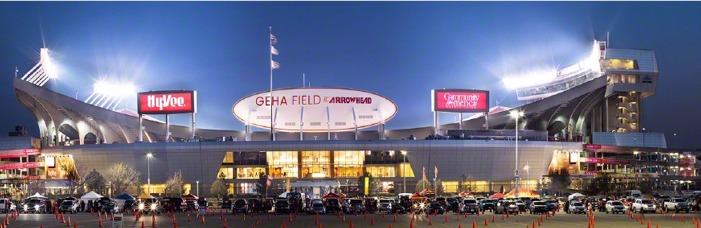
After more than five decades, Arrowhead Stadium remains one of the NFL’s most iconic and intimidating venues. The franchise’s history began in Dallas as the Texans before founder Lamar Hunt relocated the team to Kansas City in 1963 and renamed them the Kansas City Chiefs.
For nearly a decade, the Chiefs shared aging Municipal Stadium with MLB clubs, prompting civic leaders to pursue a long-term stadium solution. After early site proposals stalled, the Jackson County Sports Complex Authority was formed to acquire land, secure funding, and oversee development. Although initial plans called for a single multipurpose stadium, design and capacity concerns led officials to pursue separate facilities for baseball (Royals) and football (Chiefs) — a forward-thinking decision at a time when many cities opted for dual-use venues. In June 1967, voters approved a $102 million bond issue to fund construction. Ground broke on the Truman Sports Complex on July 11, 1968. While early designs included a rolling roof for both stadiums, the concept was ultimately abandoned due to cost overruns and potential delays.
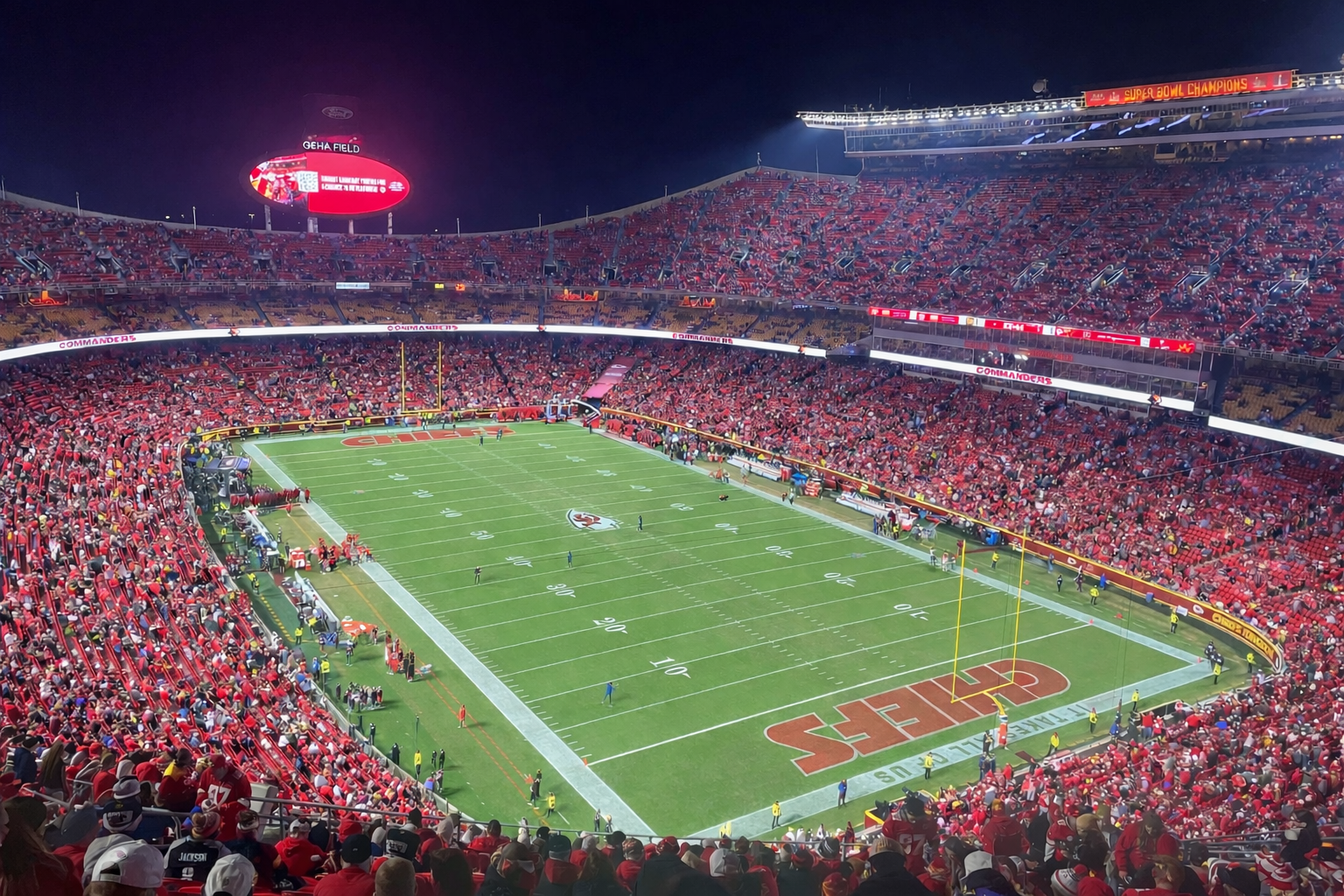
Completed in time for the 1972 season, Arrowhead Stadium officially opened that August when the Chiefs hosted the St. Louis Cardinals. Unlike many stadiums built during that era, Arrowhead was designed exclusively for football, creating exceptional sightlines and an immersive fan experience. More than 79,000 red-and-gold seats in a three-tier configuration fully enclosed the playing surface, which was originally Astroturf.
| MEMORABLE MOMENTS IN CHIEFS HISTORY |
|
Since opening, Arrowhead has undergone numerous upgrades. A dome proposal surfaced in 1984 but was shelved due to expense. In 1991, a JumboTron videoboard was installed in the south end zone, and the playing surface was converted to natural grass in 1994. By 2000, all original seats had been replaced.
In 2007, the Chiefs unveiled a comprehensive renovation plan to ensure the stadium remained competitive with newer NFL facilities. Completed prior to the 2010 season, the upgrades included a modernized club level, expanded concession and retail spaces, a refurbished team store, and Founders Plaza on the north side honoring Lamar Hunt. The project also added the Horizons Level above the south upper deck, introducing a new press box, luxury suites, and premium seating. While the seating bowl’s structure remained intact, capacity decreased to 76,416. The 28,000-square-foot Chiefs Hall of Honor was added along the lower concourse, showcasing franchise history through exhibits and artifacts. New HD video boards were installed in both end zones to enhance the game-day atmosphere.
In recent years, as numerous NFL franchises have built new stadiums or undertaken major redevelopments, the Chiefs have evaluated long-term options for their future. In 2024, the team introduced an $800 million renovation proposal aimed at modernizing Arrowhead, but Missouri voters rejected a related sales tax measure. In December 2025, the organization announced plans for a $3 billion domed stadium in Wyandotte County, Kansas, targeted to open in 2031 after Kansas lawmakers approved public financing support.
Arrowhead’s reputation, however, remains unmatched. Widely recognized as one of the loudest stadiums in professional football, it is equally famous for its electric tailgating culture. On the field, the Chiefs have enjoyed a sustained run of excellence in the modern era, led by stars such as Patrick Mahomes and Travis Kelce, capturing multiple AFC championships and three Super Bowl titles since 2019 — further cementing Arrowhead Stadium’s legacy as one of the NFL’s great stadiums.