Often referred to as “America’s Team” following their dominance in the 1990s, the Dallas Cowboys ushered in a new era with the opening of AT&T Stadium in 2009. For more than three decades prior, the franchise played at Texas Stadium, one of the NFL’s most recognizable venues. As league economics evolved, however, owner Jerry Jones began exploring options to expand or replace Texas Stadium as early as 1994 to enhance revenue opportunities and modernize the fan experience. Initial concepts called for expanding Texas Stadium by 40,000 seats and adding a retractable roof. Over time, those discussions shifted toward building an entirely new, state-of-the-art facility. After nearly a decade of evaluating potential sites, the Cowboys selected a location in Arlington near what was then Globe Life Park in Arlington, home of MLB’s Texas Rangers. To finance the $1.15 billion project, Arlington voters approved a $325 million bond package in November 2004, funded through targeted increases in local sales, hotel occupancy, and rental car taxes. The NFL contributed $150 million, with the Cowboys covering the remaining balance.
| MEMORABLE MOMENTS IN COWBOYS HISTORY |
|
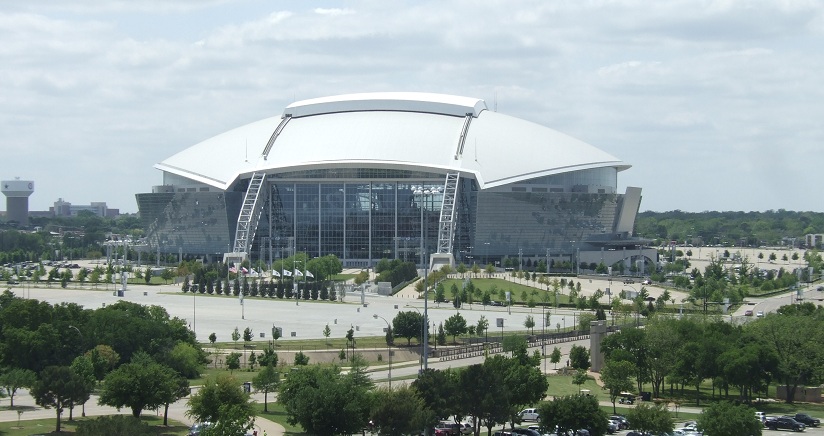
Designed by HKS Architects, AT&T Stadium quickly became one of the most architecturally distinctive venues in sports. Its exterior features a dramatic 800-foot canted glass wall, while two monumental 292-foot steel arches span the stadium’s length, supporting both the structure and its retractable roof. At each end zone, massive glass doors—measuring 180 feet wide by 120 feet high—can open or close in approximately 18 minutes, creating a seamless indoor-outdoor environment. When the roof is open, it evokes the signature “hole in the roof” design that made Texas Stadium famous.
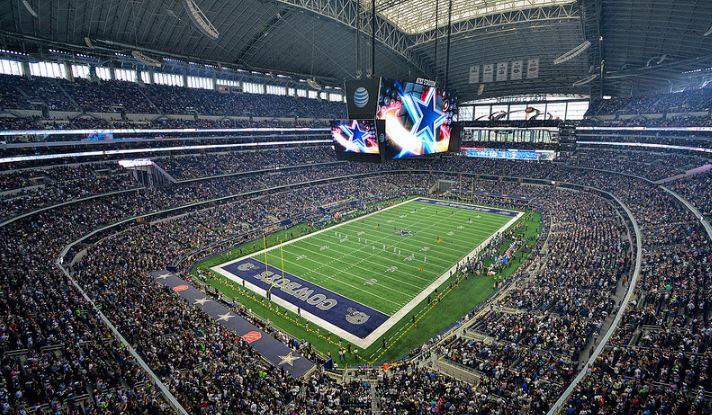
Upon entering, fans are treated to panoramic views of the field, which sits 50 feet below street level. The stadium’s standard seating capacity is 80,000 but can expand to nearly 100,000 for marquee events such as the Super Bowl. Seats are mounted on aluminum rails rather than individually bolted into concrete, allowing flexibility to increase capacity by narrowing spacing when needed. Across five levels, the stadium features approximately 200 luxury suites, including the exclusive Hall of Fame level just 21 rows from the field, along with roughly 15,000 premium club seats offering elevated amenities.
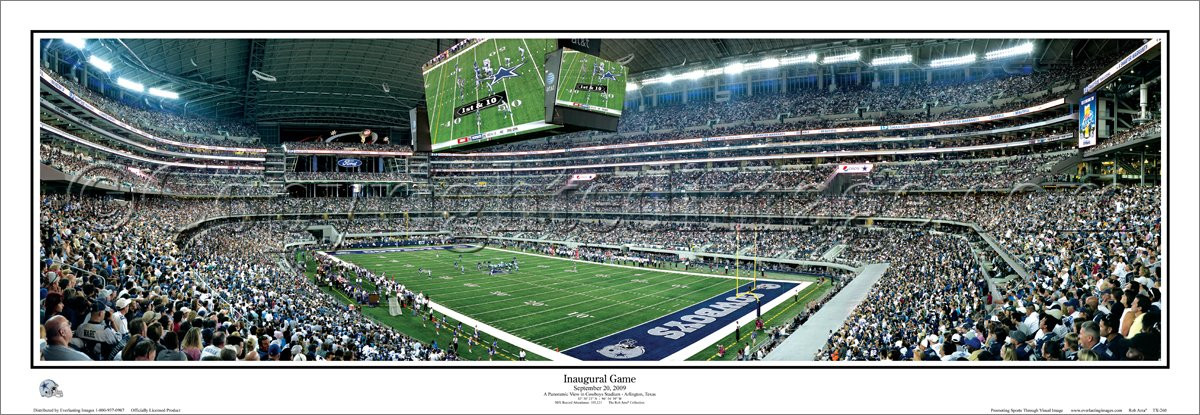
Suspended 90 feet above midfield is one of the most recognizable features in global sports: a colossal, four-sided HD videoboard measuring 160 feet long by 72 feet high, stretching from one 25-yard line to the other. The stadium also houses the Dallas Cowboys Hall of Fame and Pro Shop, giving fans immersive access to team history and merchandise.
The first event at AT&T Stadium was a concert headlined by George Strait on June 9, 2009. The Cowboys played their inaugural regular-season game there on September 20, 2009, against the New York Giants. Originally known as Cowboys Stadium, the venue was renamed AT&T Stadium in July 2013 after AT&T acquired the naming rights.
Beyond serving as the Cowboys’ home, AT&T Stadium has become a global event destination, hosting the 2010 NBA All-Star Game, Super Bowl XLV, the College Football Playoff National Championship, the Cotton Bowl Classic, and numerous high-profile concerts and sporting events—cementing its status as one of the premier stadiums in the world.